From the Crew
Paving in Butte County: How NorCal Weather Affects Timing, Materials, and What Holds Up
We get the same two questions from customers every year. "When is the best time to pave?" and "Will it last?" Both answers depend on weather — specifically on the unusual climate profile we have in Butte County and the surrounding North Valley. After 33 years working in this area, here's what we've learned about timing, materials, and what holds up.
The Butte County climate profile
Northern California isn't Florida and it isn't Minnesota. We have a Mediterranean climate up here: hot dry summers, mild wet winters, almost no humidity, occasional brief freezes in the foothills, and a four-month rainy window from roughly November through March. Annual rainfall in Chico runs around 26″, most of it concentrated in December through February. Summer temperatures regularly hit triple digits in July and August. Winter lows in the valley rarely drop below freezing for long, though Forest Ranch, Magalia, and the upper Paradise ridge do get hard frosts.
That climate has three direct implications for asphalt:
- UV degradation is our biggest enemy. Hot, dry, sunny summers age asphalt fast.
- Freeze-thaw cycles are minor compared to colder climates, but cracks still let water in during the wet months and that water still does damage.
- The paving season is long compared to most of the country — we can work April through October reliably, and often stretch into November or back into March.
Why summer paving isn't always ideal
Customers often assume summer is the best time to pave because the weather is most reliable. It's partly true — you're not fighting rain. But peak summer in the North Valley has its own problems.
When ambient temperatures push past 100°F and the existing surface is sitting in direct sun, the asphalt mix arrives already-hot but lands on a surface that's also already-hot. Cooling and compaction become harder to control. Edges can deform under power-steering loads for longer than usual because the new asphalt stays soft late into the evening.
We still pave in July and August — plenty — but we schedule those jobs for early morning starts, we shade-stage the materials when we can, and we're more aggressive about telling customers to stay off the new surface for the full 48-hour window. If you have the flexibility to schedule for spring or fall, we'll usually recommend it.
The fall paving sweet spot
October is our favorite month for residential driveway paving. Temperatures are reliably in the 70s and 80s during the day, nights are still warm enough for proper curing, the rain hasn't started yet, and the asphalt plants are still running their summer mix. We can pave fast, cure clean, and have customers parking on it within the standard window.
The catch: October is our busiest month, and we book up. If you're thinking about fall paving, call us in late August or early September. By the time the leaves change, our schedule is full.
Why winter paving is rare (but not impossible)
You can pave in winter in Butte County — we do emergency repair work in December and January every year. But there are real constraints. The asphalt plants run a winter mix that's slightly different from summer mix. Daytime temperatures need to be above 50°F at minimum, ideally 60°F+, when the asphalt goes down. Surface temperatures matter too — pouring fresh hot-mix on a 38°F slab of cold concrete is a recipe for premature failure.
And, of course, we need a dry window. A storm rolling in within 24 hours of paving means we don't pave that day. Asphalt that gets rained on while it's still hot will not bond properly and will fail prematurely.
If you need winter paving, plan for delays and flexibility. We'll do it when the conditions are right — not on a calendar deadline.
Materials that hold up in our climate
Hot-mix asphalt is the standard for new construction, and it's what we recommend for almost all residential and commercial work in Butte and Glenn Counties. There are a few specific things worth knowing:
- Mix temperature at delivery matters. Asphalt that arrives below ~270°F is going to be a problem. We watch this on every truck.
- Compaction is everything. Under-compacted asphalt fails fast under our UV load. We don't skimp on roller passes.
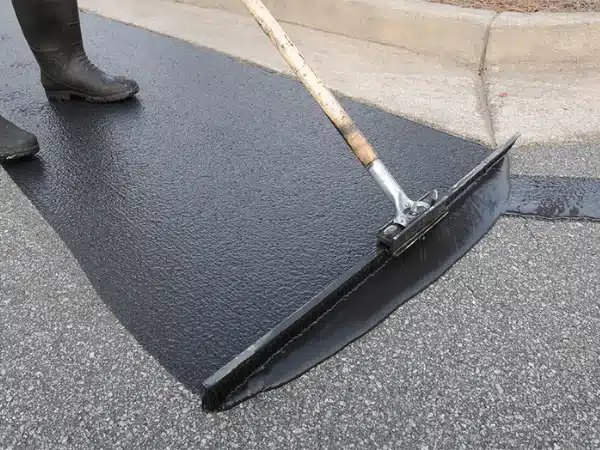
- Sealcoating is more important here than in cooler climates. UV is the slow killer of asphalt in the North Valley. A sealcoat every 3–5 years extends life dramatically.
- Cold patch is a temporary fix, not a solution. If you have a pothole in February and we can't pave properly, cold patch holds it for a few months. We come back in spring and do it right.
The Camp Fire rebuild context
Working in Paradise and Magalia post-Camp-Fire taught us a few things that apply to the whole ridge area. Soil conditions after a major fire can change — hydrophobic soil layers, debris contamination, and base instability are real issues that affect how a driveway holds up over time.
For rebuild work specifically, we spend more time on base prep than we would on a typical job. Some lots need additional road base brought in. Some need drainage work that wasn't needed before. We've learned to budget time for that. If you're rebuilding and planning your driveway paving, build in margin for base prep beyond what a "normal" estimate would show.
Practical timing advice
If you're trying to figure out when to schedule, here's how we'd think about it:
- Best: Late September through mid-November (book by August).
- Very good: Mid-April through June (book in winter).
- Workable: July through August (book early, plan for early-morning starts).
- Possible with flexibility: March and early December (book ASAP, expect weather delays).
- Avoid if you can: January and February. We can do emergency repair, but planned paving really should wait.
Whatever season you're planning around — call us early. The good paving windows in this area are short, and the contractors who do good work get booked up fast. We'd rather give you a date in September when you call in May than have to tell you in August that we can't fit you in this year.
Got a question we haven’t answered? Call (530) 896-1727 or send us a message — we’re happy to walk through it.